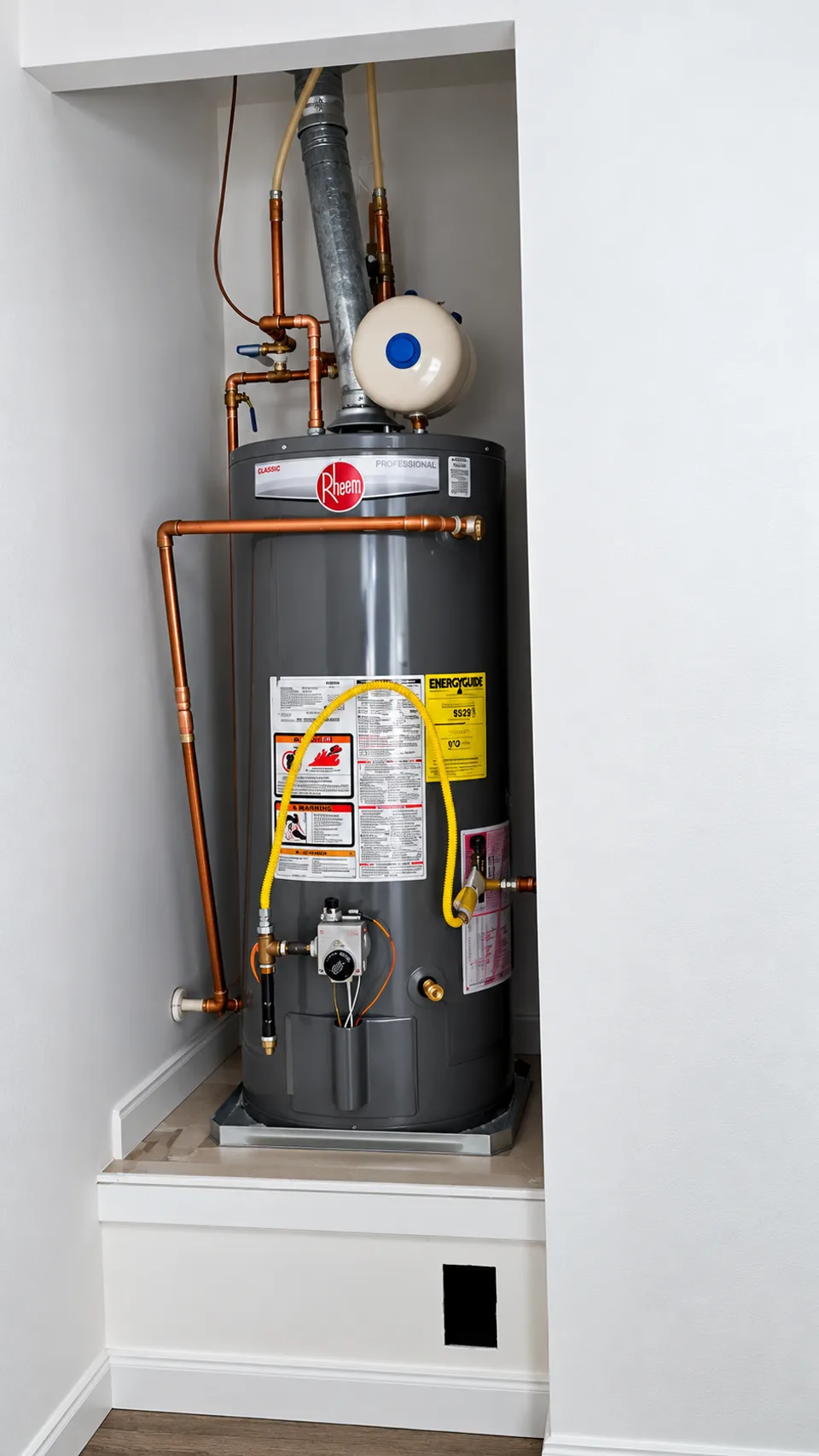
Water Heater Leaking? What to Do Right Now (and What It Means)
A leaking water heater in Marietta needs prompt attention. Learn safe observations, common leak sources and when to arrange professional repair or replacement.

Published · R.S. Andrews
Water on the floor near the heater is stressful for any Marietta, GA homeowner, whether you live near Life University or across town.
Finding water on the floor around your water heater is stressful. Sometimes it's a small fitting that needs tightening. Other times, it's the tank itself giving out. Either way, acting quickly limits damage to floors, drywall, and belongings.
Here's what to do immediately, how to figure out where the water is coming from, and how to decide what comes next.
Step 1: Keep Clear and Get Help
Keep people away from standing water and wet electrical equipment. Do not touch the heater, open electrical panels, adjust gas controls, operate the relief valve or try to relieve pressure yourself.
Call a qualified plumber promptly and describe what you can observe from a safe, dry location. If gas is smelled, leave the home without operating switches and call the gas utility or emergency services from outside.
Step 2: Protect Belongings Without Entering a Hazard
Move belongings only if you can do so from a safe, dry area away from the heater and electrical equipment. Document visible damage from that location. Avoid using powered cleanup equipment in standing water; have the equipment and area made safe before cleanup.
For an active or spreading leak, ask the plumber or appropriate emergency service for immediate help. Professional water mitigation may be needed after the source is controlled.
Step 3: Find Where the Water Is Coming From
Not every leak means a dead tank. Describe the visible location of drips or pooling without touching the equipment or entering standing water. A plumber should confirm the source.
Top of the Tank: Fittings and Connections
Water dripping from the inlet or outlet pipes on top may come from loose or corroded fittings. A plumber may be able to repair or replace the fitting. This is often a repair rather than a replacement.
Temperature and Pressure Relief Valve
If water drips or flows from the relief valve or its discharge pipe, the cause could be excess pressure, excess temperature, or a worn valve. Don't cap or plug this valve. It's a safety device. A plumber should diagnose why it's opening, which may involve checking water pressure or thermal expansion.
Drain Valve
A slow drip from the drain valve at the bottom sometimes means the valve isn't fully closed or has failed. A plumber can assess whether the valve needs repair or replacement. Do not try to tighten or operate it yourself.
Condensation
Especially in cooler weather or with high-efficiency units, moisture on the outside of the tank or on nearby pipes can be condensation, not a leak. A technician can distinguish condensation from a plumbing or tank leak.
Bottom of the Tank
Water pooling beneath the tank usually deserves the most concern. If the water is coming from the tank body itself, the inner steel liner has typically corroded through. Tank leaks can't be repaired.
Tankless Units
Leaks from a tankless unit often come from fittings, isolation valves, or an internal component. Mineral scale and worn seals can contribute. Call a qualified technician; leave water, power and gas isolation to professional guidance.
Step 4: Decide: Repair or Replace?
Repair is often possible if:
- The leak is from a fitting, valve, or connection
- The tank is dry and intact
- The unit is relatively young
Replacement is typically necessary if:
- Water is leaking from the tank body
- The tank is rusted or corroded
- The unit is old and has had repeated problems
Our full guide to repair vs. replace walks through the decision, and the warning signs of a failing water heater can help you spot problems earlier next time.
If a plumber determines the leak is from a fitting or valve, a water heater repair may solve it. If the tank has failed, see our water heater replacement page.
Why Do Water Heaters Leak?
- Corrosion: The most common reason for tank failure. Anode rods protect the tank, but once exhausted, corrosion eats into the steel.
- Sediment buildup: Overheating at the bottom of the tank can stress the lining.
- High water pressure: Excess pressure strains fittings and tank seams.
- Age: Older tanks are more prone to failure. See how long water heaters last.
- Poor installation: Loose connections, missing expansion control, or improper piping can cause leaks.
Regular upkeep helps. Our maintenance checklist covers the steps that can reduce the chance of an unexpected leak.
Water Damage: What to Do Afterward
- Arrange prompt drying and water mitigation after the equipment and affected area have been made safe.
- Check walls, flooring, and nearby appliances for moisture.
- Contact your homeowner's insurance to ask whether the damage is covered. Ask about your specific policy and the documented cause.
- Consider professional water mitigation for larger leaks.
Preventing Flood Damage Going Forward
- Ask your plumber whether a properly drained pan is appropriate for the installation.
- Ask your plumber about a leak detector and a compatible automatic water shutoff system.
- Know where your main water shutoff is.
- Have your plumber check that the relief-valve discharge piping is correctly installed and unobstructed.
What Happens Next
If your tank has failed, you'll want to choose a replacement efficiently. You can compare tank vs. tankless options, review gas vs. electric, and use our sizing guide to choose the right capacity. Our water heater service page explains how to get help.
Frequently Asked Questions
Can a leaking water heater tank be repaired? Generally no. If the leak comes from the tank body, the inner liner has failed and the unit needs to be replaced. Leaks from fittings, valves, or connections are often repairable.
Is a leaking water heater dangerous? It can be. Water near electrical connections is a hazard, and damaged gas components can also create a hazard. Keep clear and arrange qualified help promptly.
How fast should I act? Quickly. Even a slow leak can damage flooring and promote mold. Keep clear of hazards and arrange a professional inspection promptly.
Does homeowner's insurance cover water heater leaks? Coverage depends on your policy and the cause of the damage. Contact your insurer and provide the inspection findings and damage records.
Water Heater Service in Marietta
R.S. Andrews serves Marietta homeowners. Explore water heater service or replacement and installation, or call 770-816-8116 to discuss your home's needs and confirm service at your address.