What Size Water Heater Do I Need? A Sizing Guide for Marietta Homes
Learn how to size a tank or tankless water heater using household size, peak demand, first-hour rating, and flow rate to compare models against your household's demand. Serving Marietta, GA.
Published · R.S. Andrews
Sizing matters whether you're in a small bungalow near the Marietta Museum of History or a larger family home elsewhere in Marietta, GA.
A water heater that's too small leaves you with cold showers. One that's too large wastes energy and money. Getting the size right is one of the most important parts of a replacement, and it isn't just about gallons.
This guide explains how sizing works for both tank and tankless water heaters so you can have an informed conversation with your installer.
Tank Sizing: It's Not Just Gallons
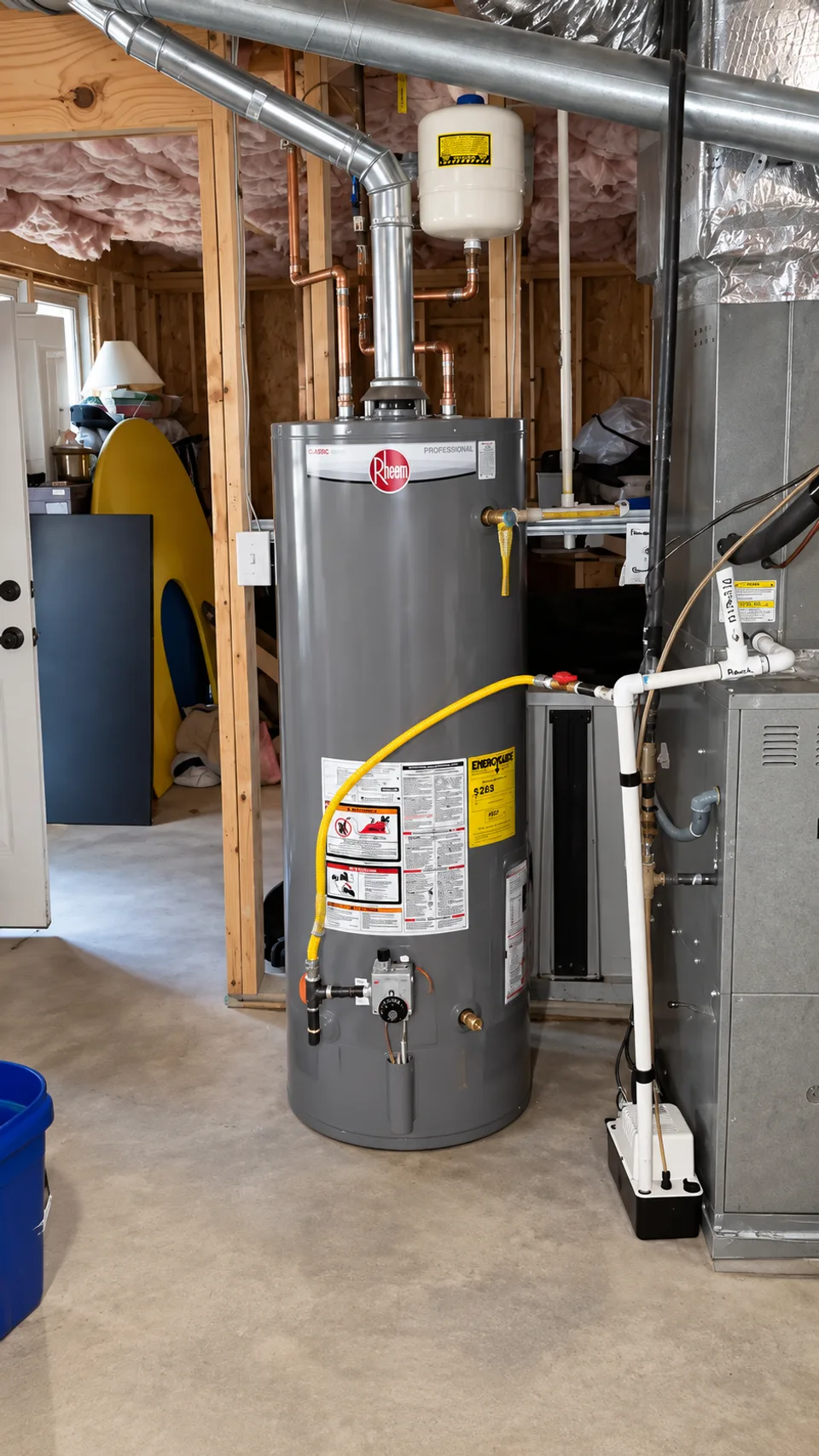
Tank water heaters are sold by capacity: 30, 40, 50, 65, 80 gallons and beyond. But capacity alone doesn't tell you how much hot water you'll actually get. The more useful number is the First Hour Rating (FHR), which shows how many gallons of hot water the heater can deliver in one hour starting with a full tank. It accounts for both the tank's storage and its recovery rate.
You'll find the FHR on the unit's yellow EnergyGuide label. Compare it against your household's peak hour demand.
Estimating Your Peak Hour Demand
Identify the busiest hour of hot water use in your home. List the showers, baths, laundry and other activities that overlap. Use your fixtures' flow rates, typical run times and appliance specifications to estimate demand with your installer.
A long shower or large soaking tub can change the calculation substantially. A household count alone cannot tell you the required first-hour rating.
A Practical Tank-Sizing Checklist
Use these questions when comparing tank models rather than relying on a universal gallons-per-person rule.
| Household detail | What your installer should check |
|---|---|
| People and daily routine | Hot water demand during the busiest hour |
| Showers, tubs and appliances | Actual flow, run time and simultaneous use |
| Tank capacity and recovery | Whether the model's first-hour rating meets demand |
| Fuel and equipment type | The selected model's recovery performance |
| Future household changes | A sensible allowance for expected use |
Why Fuel Type Affects Sizing
Many conventional gas models recover faster than electric-resistance tanks, but the rated performance of the exact models matters more than fuel type or capacity alone. That's one reason sizing is easier to do with the full picture. Our guide on gas vs. electric water heaters discusses recovery differences, and you can see more on our gas water heaters and electric water heaters pages.
Sizing a Tankless Water Heater
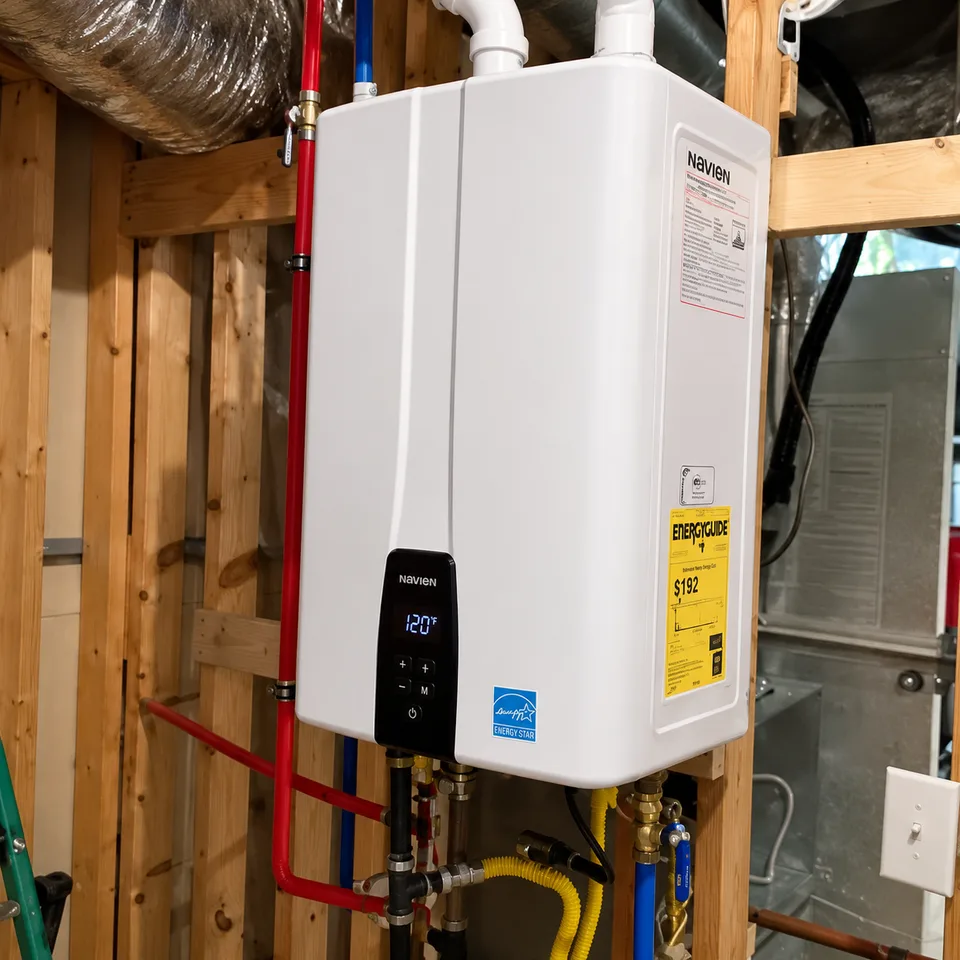
Tankless units are sized differently. Because they heat water on demand, what matters is:
- Flow rate (gallons per minute, GPM): How much hot water you need at the same time.
- Temperature rise: The difference between incoming water temperature and your desired output.
Step 1: Add Up Simultaneous Flow
List the fixtures you might run at once and use their actual gallons-per-minute specifications. Your installer can distinguish mixed-water fixture flow from the hot-water portion and account for appliances that cycle rather than draw continuously.
Step 2: Determine Temperature Rise
If incoming water is, say, 60°F and you want 120°F, your temperature rise is 60°F. Colder incoming water in winter means a greater rise and a lower flow rate from the same unit. That's why sizing for the coldest months matters.
Step 3: Match to a Unit's Capacity
Manufacturers publish how many GPM each model can deliver at various temperature rises. Match your flow and rise to a unit that meets or exceeds them.
Some homes use multiple tankless units or a larger unit for high demand. Learn more on our tankless water heaters page, or compare brands such as Rinnai, Navien, Noritz, and Takagi.
Signs Your Current Heater Is the Wrong Size
Too small:
- Hot water runs out during normal use
- Long recovery time
- A tankless unit that cannot maintain the requested temperature when multiple fixtures run
Too large:
- High standby energy costs on a tank unit
- Paying for capacity you never use
If you've had these problems with your current heater, a replacement is a chance to correct the size. Compare it with the symptoms in our guide to the warning signs of a failing water heater, because a heater that's wearing out can feel undersized when it isn't.
Physical Size and Fit
Capacity isn't the only dimension that counts. Check:
- Height and diameter of the new tank versus your closet, garage, or utility space
- Clearances required by the manufacturer and code
- Existing connections and venting position
- Door and stair clearance for getting the unit in
A taller or wider tank may not fit where your old one did.
The U.S. Department of Energy defines first-hour rating as the hot water a storage unit can supply in an hour that starts fully heated. Tankless performance must be compared at the required temperature rise, not just a headline maximum flow.
Questions to Ask Your Installer
- What's the first hour rating of this model?
- How did you estimate my peak demand?
- How will this size handle my largest simultaneous use?
- Will my gas line, venting, or electrical circuit support this unit?
- What happens if I add a bathroom or family member later?
Next Steps
If you're replacing a unit, our water heater replacement page explains the process, and the water heater brands page can help you start comparing models. If you're still deciding between types, revisit our tank vs. tankless comparison.
Frequently Asked Questions
Is bigger always better? No. An oversized tank can waste energy through standby loss and costs more up front. The goal is to match capacity and recovery to your peak demand.
Does the number of bathrooms matter? Yes, but the number of people and how they use hot water at the same time matters more. A large soaking tub or multiple simultaneous showers can raise your needs.
Should I size up if I might add family members? It's worth discussing with your installer. A modest cushion can be sensible, but a much larger unit may not be.
Can my current heater's size tell me what I need? It's a starting point, but if your current unit runs out of hot water, it may be undersized. If it never does, it may be about right or larger than necessary. Our water heater replacement page explains the next steps.
Water Heater Service in Marietta
R.S. Andrews serves Marietta homeowners. Explore water heater service or replacement and installation, or call 770-816-8116 to discuss your home's needs and confirm service at your address.