7 Warning Signs Your Water Heater Is Failing (Marietta Homeowner's Guide)
Rusty water, strange noises, puddles, and lukewarm showers can all point to a failing water heater. Here are seven warning signs Marietta homeowners should know.

Published · R.S. Andrews
Whether your home is a few blocks from the Marietta Square or out near Kennesaw Mountain, a failing water heater is the same problem anywhere in Marietta, Georgia.
Nobody thinks about their water heater until the shower runs cold. By then, you're usually dealing with a problem that's been building for months. The good news is that most water heaters give off warning signs before they fail completely. If you know what to look and listen for, you can plan a repair or replacement on your schedule instead of in the middle of an emergency.
Here are seven warning signs Marietta homeowners should take seriously.
1. Not Enough Hot Water
If your showers used to stay hot for a full ten minutes and now run cold after five, something has changed. On a tank-style heater, the most common causes are a failing heating element (electric models), a failing burner or gas control (gas models), or sediment taking up space inside the tank so there's less room for hot water.
A single bad element or thermostat is often a straightforward repair. But if the unit is old and the problem keeps coming back, you may be looking at the early stages of a tank that is simply worn out. Our water heater repair page explains what's typically fixable and what isn't.
2. Water That Never Gets Hot Enough (or Gets Too Hot)
Inconsistent temperature is another red flag. Water that swings between scalding and lukewarm can point to a faulty thermostat or temperature sensor. Water that never gets past lukewarm, even after the heater has had plenty of time to recover, can mean a failing element or a burner problem.
Don't ignore water that gets dangerously hot. A malfunctioning thermostat is a safety issue, not just an inconvenience. If you notice scalding water, avoid using the affected hot water and arrange a professional inspection promptly.
3. Rusty or Discolored Hot Water
If water from your hot taps looks brown, orange, or reddish, but your cold water runs clear, the problem may be inside your tank. Tank-style water heaters contain a sacrificial part called an anode rod that is designed to attract corrosion so the steel tank doesn't rust. Once the rod is used up, the tank itself can begin to corrode.
Rusty hot water doesn't always mean the tank is finished. Sometimes it's the pipes, and sometimes a worn anode rod can be replaced. But if you also have an older unit, discolored water is a strong hint to schedule an inspection. Our water heater maintenance page covers how anode rod checks fit into regular service.
4. Strange Noises: Popping, Rumbling, or Banging
A water heater shouldn't sound like a popcorn machine. Popping and rumbling are typically caused by sediment that has settled at the bottom of the tank. As the burner or lower element heats the water, steam bubbles form beneath the layer of sediment and burst through it, creating the noise.
That sediment layer makes your heater work harder, wastes energy, and can overheat the bottom of the tank over time. Flushing the tank can sometimes help if the sediment hasn't hardened, but heavily built-up sediment is a sign the unit has been neglected or is nearing the end of its life.
5. Moisture, Puddles, or Leaks Around the Tank
This is the sign you should never wait on. A little moisture around fittings or the temperature-and-pressure relief valve might be a minor, fixable issue. But water pooling around the base of the tank often means the tank itself has developed a leak, and tank leaks can't be repaired.
If you find water around your heater, keep people away from wet electrical equipment and standing water. Call a qualified plumber promptly and describe the leak. Do not open electrical panels, adjust gas controls, or operate the pressure-relief valve.
If the tank itself is leaking, replacement is the safer choice. Our water heater replacement page explains what that process looks like.
6. Your Unit Is Past Its Expected Lifespan
Age matters. Traditional tank water heaters are often cited as lasting somewhere around 10 to 15 years, depending on the model, water quality, and how well the unit has been maintained. Tankless units are generally expected to last longer with proper care.
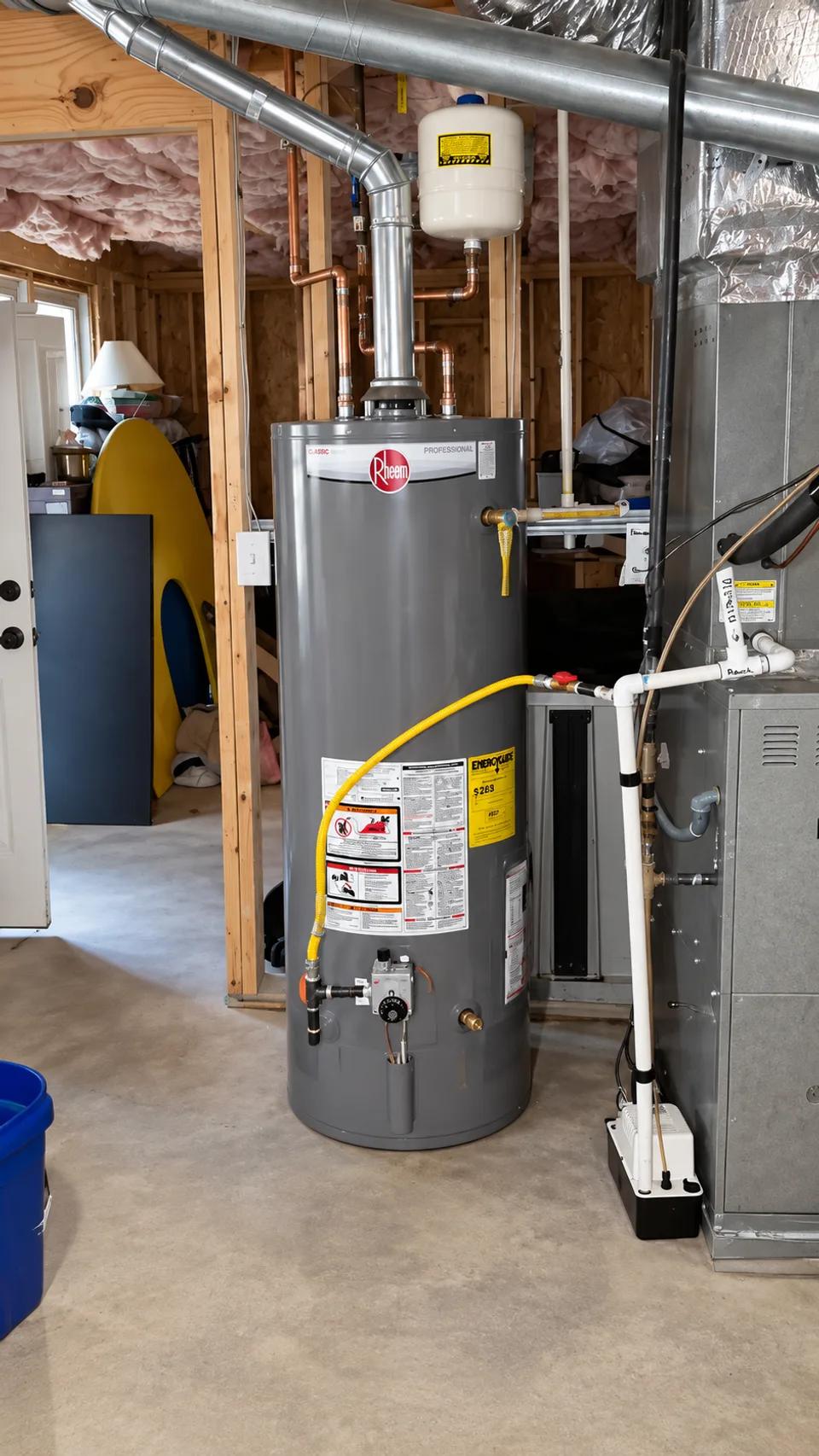
If you don't know how old your heater is, check the manufacturer's label on the tank. The serial number usually encodes the manufacturing date, though each brand uses its own format. If your unit is approaching or beyond the typical range, every other warning sign on this list deserves extra weight.
7. Rising Energy Bills With No Other Explanation
When a water heater struggles, it uses more energy to deliver the same results. Sediment buildup, failing elements, and worn components all reduce efficiency. If your gas or electric bill has crept upward and you can't tie it to weather or usage changes, an aging water heater could be part of the story.
So, Repair or Replace?
One warning sign on a newer heater usually points to a repair. Several warning signs on an older heater usually point to replacement. We break down the decision in detail in our post on whether to repair or replace your water heater in Marietta.
A few quick rules of thumb:
- Repair often makes sense if the unit is relatively young, the problem is a single component, and the tank itself isn't leaking or corroded.
- Replace often makes sense if the unit is near or past its typical lifespan, the tank is leaking, or you're facing repeated repairs.
What to Do Next
If you've spotted one or more of these signs, don't wait for a total failure. A quick inspection can tell you whether you have a simple fix or a unit that's on borrowed time. Replacing a water heater on your own timeline lets you compare options, choose the right size and fuel type, and consider the work your home needs before an unexpected failure.
If you're ready to explore your options, start with our water heater replacement page, or if you'd like someone to take a look first, check out our full water heater service options in Marietta.
Water Heater Service in Marietta
R.S. Andrews serves Marietta homeowners. Explore water heater service or replacement and installation, or call 770-816-8116 to discuss your home's needs and confirm service at your address.