Tank vs. Tankless Water Heaters: Which Is Right for Your Marietta Home?
Compare tank and tankless water heaters on upfront cost, efficiency, lifespan, space, and hot water supply to decide which fits your Marietta home.
Published · R.S. Andrews
Picking a water heater for a Marietta home, whether it's near the Big Chicken or out by Kennesaw Mountain, starts with knowing how each type works.
When it's time to replace a water heater, one of the first decisions is whether to stay with a traditional tank or switch to tankless. Both can work well. The right choice depends on your household, your budget, and your home's setup.
Here's an honest side-by-side comparison to help you decide.
How Each Type Works
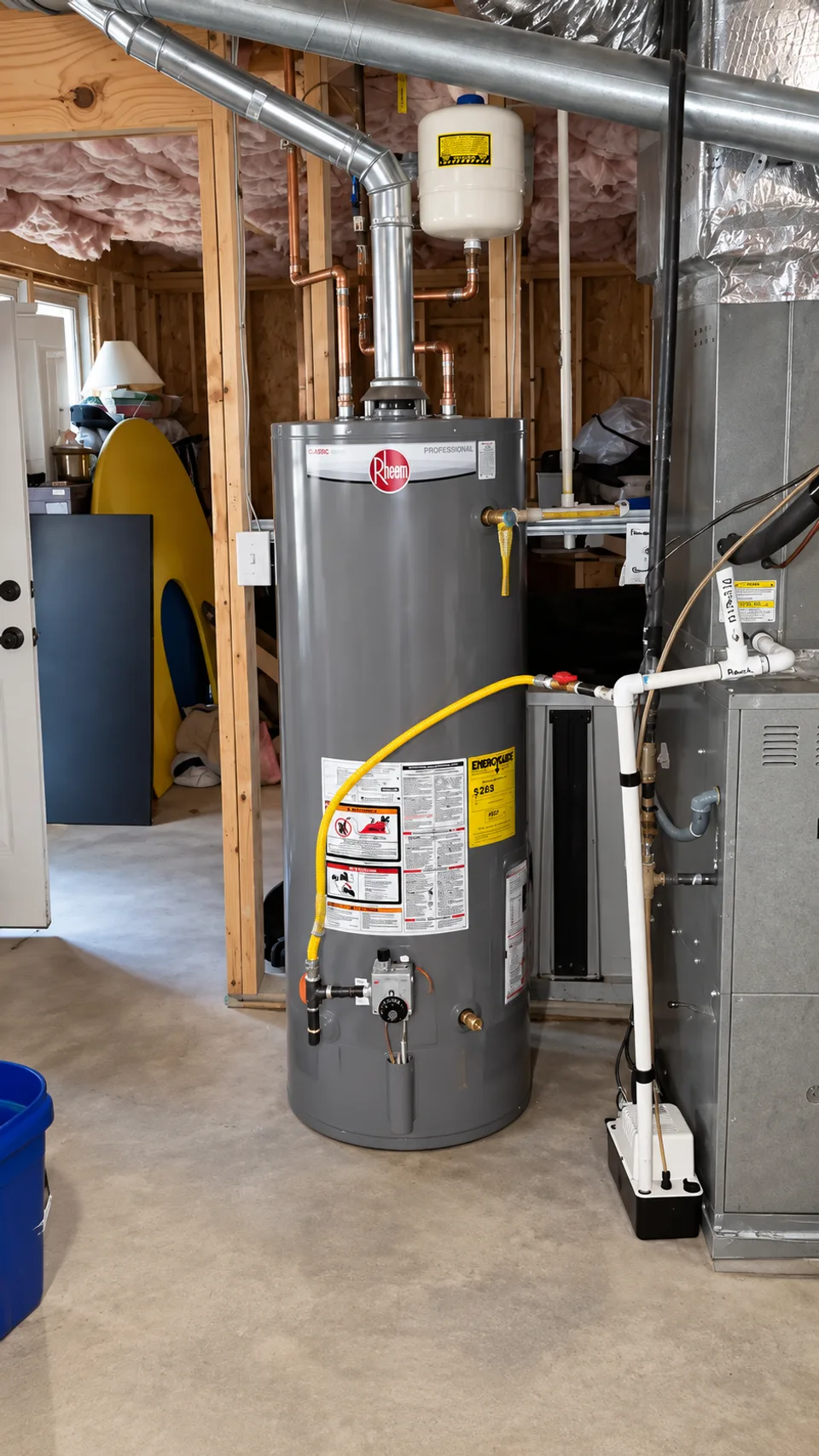
Tank water heaters store a large volume of water, typically 30 to 80 gallons for a home, and keep it hot around the clock. When you open a tap, hot water flows from the top of the tank while cold water enters the bottom to be heated.
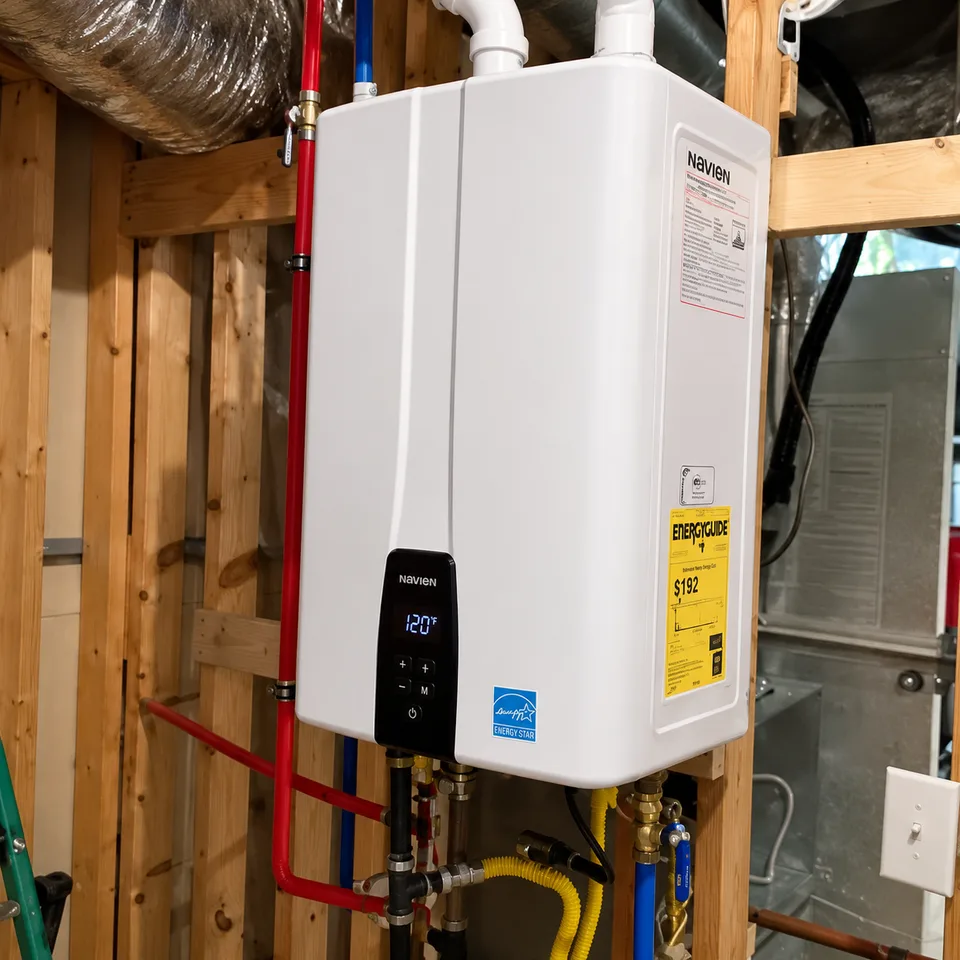
Tankless water heaters (also called on-demand) heat water only when you need it. When a hot tap opens, water flows through the unit, where a gas burner or electric element heats it instantly. There's no storage tank and no standing reserve.
You can read more about the basics on our tankless water heaters page and our water heater replacement page for tank units.
Upfront Cost
Tankless units generally cost more to purchase and install than comparable tank units. Installation can be more involved, especially when converting from a tank. Gas tankless units may require larger gas lines or updated venting, and electric tankless units can require substantial electrical capacity.
Tank water heaters are typically the lower-cost option up front and are usually the simplest to swap like-for-like.
Operating Cost and Efficiency
Tank heaters lose some heat through the tank walls even when no one is using hot water, often called standby loss. Tankless heaters avoid that, which is why they're often described as more efficient, particularly in homes with moderate hot water use.
Actual savings depend on your usage, fuel prices, and the specific models. Don't assume a tankless unit will pay for itself on a fixed timeline. A licensed professional can help you estimate based on your home.
Hot Water Supply
Tank: You have a finite supply. A 50-gallon tank can run out if several people shower back to back, then needs time to recover.
Tankless: You get continuous hot water, but only up to the unit's flow rate. If you run a shower, dishwasher, and washing machine at once, a unit that's too small may struggle to keep up. Proper sizing matters.
Lifespan
Tank heaters are commonly expected to last roughly 10 to 15 years. Tankless units are often cited as lasting 20 years or more with proper maintenance. Our guide on how long water heaters last goes deeper on what affects those numbers.
The U.S. Department of Energy's tankless water heater guide provides background on lifespan estimates. These are planning ranges, not a promised service life.
Space and Placement
Tank units need floor space and a spot for a large cylinder. Tankless units are compact and often wall-mounted, freeing up closet or garage space. Some tankless models can be installed outdoors, depending on the model and local conditions.
Maintenance
Both types need maintenance. Tank heaters benefit from flushing and anode rod checks. Tankless units benefit from periodic descaling, particularly where water has high mineral content, and from keeping filters and venting clean. See our water heater maintenance page for what regular service typically involves.
Installation Considerations
Switching from tank to tankless isn't always a plug-and-play swap. Possible requirements include:
- Upgraded gas line capacity for gas tankless units
- New or modified venting
- Increased electrical service for electric tankless units
- Plumbing modifications and shutoff valves for service
Those factors affect cost and feasibility, so it's worth having a pro evaluate your home before you commit.
Quick Decision Guide
A tank water heater may be a good fit if:
- You want the lowest upfront cost
- You're replacing a tank with a similar model and want a simple swap
- Your household's hot water needs are predictable and moderate
A tankless water heater may be a good fit if:
- You want a long-lasting unit and don't mind a higher upfront investment
- You have limited space
- You frequently run out of hot water with a tank
- You're comfortable with the installation and maintenance requirements
Brands to Consider
If you're leaning tankless, look at the major manufacturers: Rinnai, Navien, Noritz, and Takagi. For tank units, popular names include Rheem, A.O. Smith, and Bradford White. Our water heater brands page has the full lineup.
The Fuel Question Comes Next
Once you've chosen tank or tankless, you'll also decide between gas and electric. That decision has its own tradeoffs. you can browse our gas water heaters and electric water heaters pages.
If you're weighing the decision because your current heater is acting up, start with the warning signs of a failing water heater and our repair vs. replace guide.
Frequently Asked Questions
Will a tankless water heater lower my bills? It can, especially with moderate hot water use, because it avoids standby heat loss. Savings depend on your fuel prices, usage, and the specific model, so ask for an estimate based on your actual rates.
Can I install a tankless unit in the same spot as my tank? Sometimes, but not always. Venting, gas line size, electrical capacity, and clearances all need to be checked before you commit.
Do tankless heaters really provide endless hot water? They provide continuous hot water, but only up to the unit's flow rate. Running too many fixtures at once on an undersized unit can cause the output to drop.
Which type is easier to maintain? Both need care. Tanks need flushing and anode rod checks, while tankless units need periodic descaling. See our water heater maintenance page for what service involves.
Water Heater Service in Marietta
R.S. Andrews serves Marietta homeowners. Explore water heater service or replacement and installation, or call 770-816-8116 to discuss your home's needs and confirm service at your address.