How Long Do Water Heaters Last? What Marietta Homeowners Should Expect
Tank and tankless water heaters have different lifespans. Learn what affects water heater life, how to check your unit's age, and when to start planning a replacement. Serving Marietta, GA.

Published · R.S. Andrews
From older homes around the Marietta Square to newer builds out toward Kennesaw Mountain National Battlefield Park, Marietta homes have water heaters of every age.
"How old is my water heater?" is one of the most common questions homeowners ask, and one of the hardest to answer without crawling into a closet with a flashlight. Knowing the age and expected lifespan of your unit helps you budget, plan, and avoid the cold-shower surprise.
This guide covers typical lifespans for different water heater types, what shortens or extends that lifespan, and how to figure out where your unit stands.
Typical Lifespans by Water Heater Type
Lifespan estimates vary by manufacturer and by home, so treat these as general ranges rather than guarantees.
Traditional tank water heaters (gas or electric): Commonly cited at roughly 10 to 15 years. Some last longer with good maintenance and favorable water conditions. Others fail sooner if they're neglected or installed in harsh conditions.
Tankless water heaters: Often cited as lasting 20 years or more when properly maintained, since they don't hold a tank of water that can corrode from the inside. They do have components that need service, particularly in homes where mineral buildup is a concern. Our tankless water heaters page explains how they work and what they require.
Gas and electric tank heaters tend to fall in similar ranges, though specific models, warranties, and installation quality make a real difference.
For background on these general lifespan ranges, see the U.S. Department of Energy's tankless water heater guide. The condition of your own unit matters more than age alone.
What Shortens a Water Heater's Life?
Sediment and Mineral Buildup
Minerals in water settle at the bottom of a tank over time. A heavy sediment layer makes the unit work harder, creates hot spots on the tank bottom, and can contribute to premature failure. In tankless units, mineral scale can build up on the heat exchanger and reduce performance.
A Worn-Out Anode Rod
The anode rod protects the steel tank from rust by corroding first. Once it's depleted, the tank becomes the next target. Checking and replacing the anode rod is one of the most effective ways to extend a tank's life, which is why it's part of good water heater maintenance.
High Water Pressure or Poor Thermal Expansion Control
Excess pressure puts stress on the tank, fittings, and relief valve. In some homes, a pressure-reducing valve or expansion tank is part of keeping the system healthy. A licensed plumber can test pressure and recommend whether you need either.
Skipped Maintenance
Water heaters are easy to forget about. Many are never flushed, inspected, or tested after installation. Neglect doesn't always cause an immediate failure, but it steadily chips away at the unit's lifespan.
Undersized or Overworked Units
A water heater that's too small for your household works harder and cycles more frequently. Over time, that extra strain can wear it out faster.
Installation Quality
A poorly installed unit, with incorrect venting, improper connections, or missing safety components, can fail early or create safety risks. Professional installation matters.
What Helps a Water Heater Last Longer?
- Annual inspections. A yearly check can catch small problems like a leaking valve or a worn element before they turn into big ones.
- Periodic flushing. Have a professional assess sediment and service the tank at intervals recommended for your model and water conditions.
- Anode rod checks. Have a professional inspect the rod and replace it when appropriate for your model.
- Reasonable temperature settings. Ask your technician to review the temperature setting against the manufacturer's instructions and your household's needs.
- Testing the relief valve. The temperature-and-pressure relief valve is a critical safety device. Have it checked during routine service.
How to Find Your Water Heater's Age
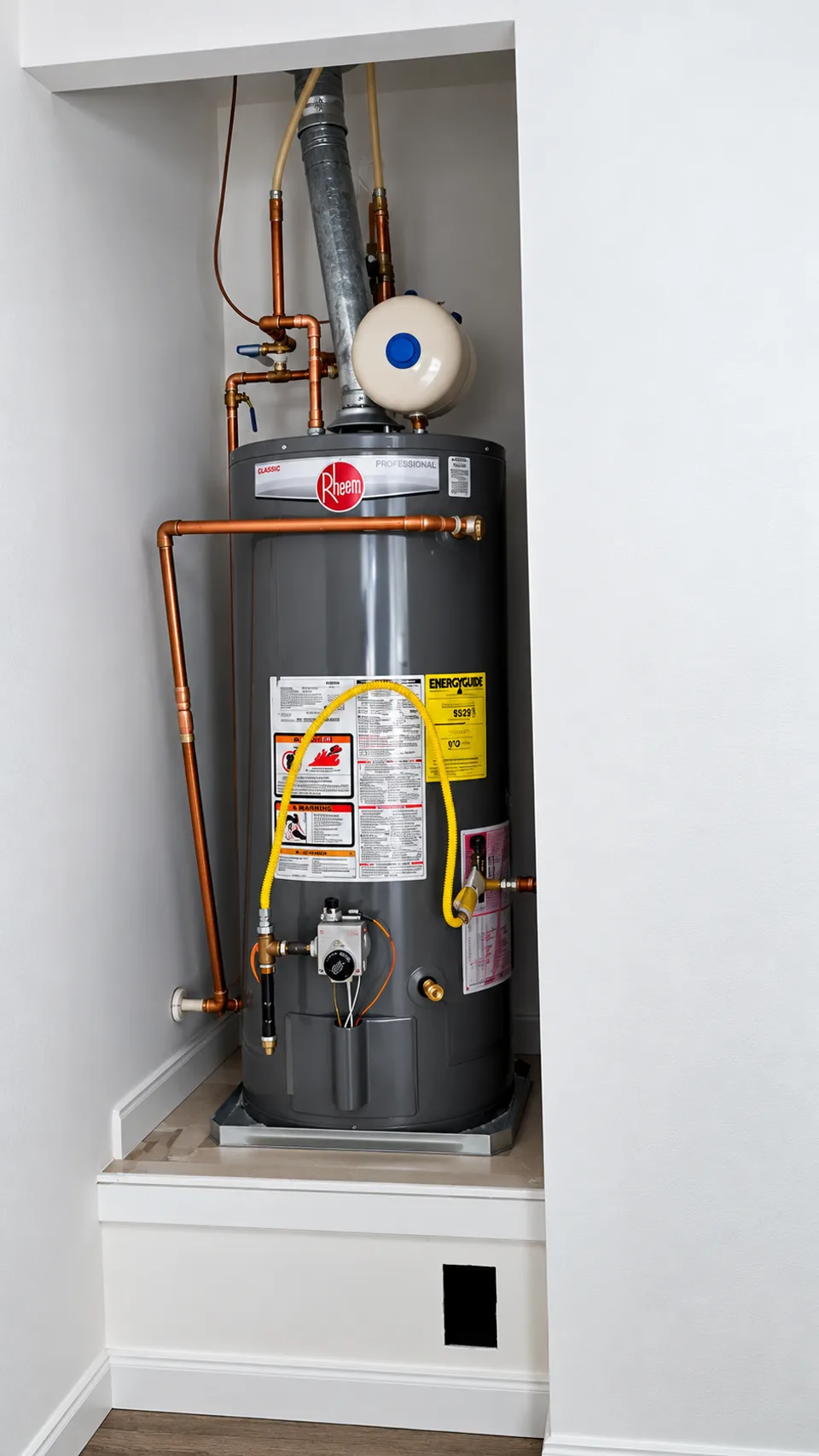
Look for the manufacturer's label on the side of the tank. It will list the model number and serial number. Most manufacturers encode the manufacture date in the serial number, but the format differs from brand to brand. A manufacturer's website or a licensed technician can help you decode it.
If you can't find or read the label, there are other clues: the style of the unit, the type of controls, and the paperwork from the home's previous owner or builder.
Our brand pages can also help you get oriented. If you have a Rheem, A.O. Smith, or Bradford White unit, you'll find brand-specific information there.
Warranty Length vs. Real-World Lifespan
A 6-year or 12-year warranty doesn't mean your water heater will last exactly that long. Warranties often cover the tank for a set period but may cover parts and labor for much less, and they usually have conditions. Treat the warranty as a baseline, not a prediction.
Signs It's Time to Start Planning
Even if your heater is working fine, start thinking about replacement when:
- The unit is at or beyond the typical range for its type.
- You're seeing rust, moisture, or corrosion around the tank or fittings.
- Repairs are becoming frequent.
- Hot water supply or temperature has become unreliable.
If you're noticing these things, review our post on the warning signs your water heater is failing, and our guide to repair vs. replacement.
Planning Ahead Saves Stress
The best time to replace a water heater is before it fails. A planned replacement gives you time to compare options, choose between tank and tankless units, think about fuel type, and schedule installation at a convenient time instead of scrambling after a flood.
If your heater is entering its later years, explore our water heater replacement information to see what the process looks like.
Frequently Asked Questions
Can I make my water heater last longer? Often, yes. Regular flushing, anode rod checks, and relief valve testing can help a tank reach or exceed its typical range, though no maintenance schedule guarantees a specific lifespan.
Is it better to replace before it fails? Usually. A planned replacement lets you compare quotes and options, while an emergency replacement tends to limit your choices. Our water heater service page explains how to get an inspection.
Does a longer warranty mean a longer-lasting heater? Not necessarily. Warranty terms reflect coverage, not a prediction of lifespan, and they often exclude labor and water damage.
Water Heater Service in Marietta
R.S. Andrews serves Marietta homeowners. Explore water heater service or replacement and installation, or call 770-816-8116 to discuss your home's needs and confirm service at your address.