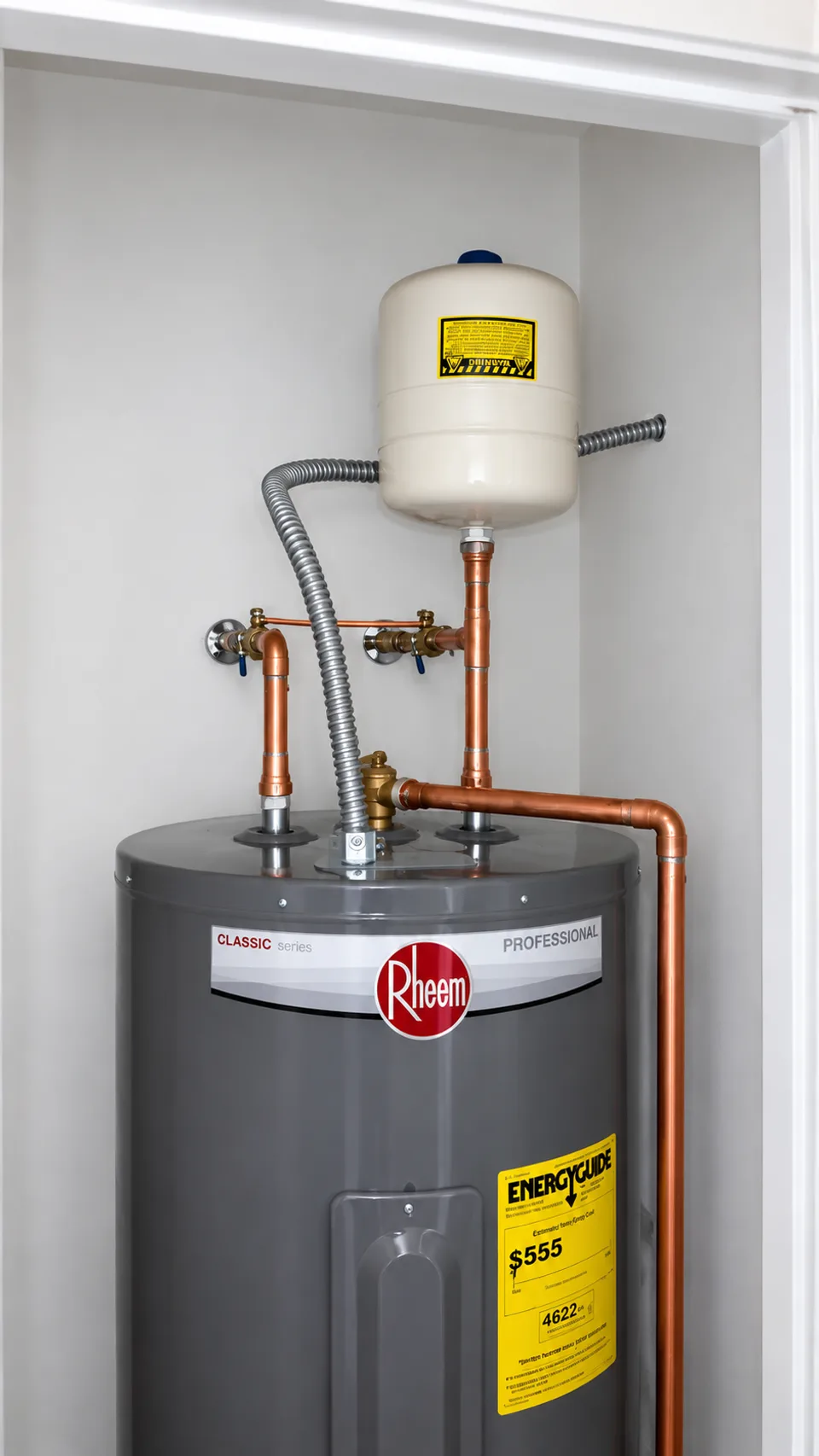
Water Heater Maintenance Checklist: What to Do and How Often
A practical water heater maintenance checklist for Marietta homeowners: safe visual checks, manufacturer-based service intervals, and when to schedule a professional.

Published · R.S. Andrews
A quick yearly routine can keep your water heater going, whether you live near Marietta National Cemetery or anywhere else in Marietta, GA.
Most people maintain their cars, HVAC systems, and smoke detectors, then forget about the appliance that heats water for every shower, load of laundry, and sink of dishes. A little regular attention goes a long way toward preventing breakdowns and getting the most from your unit.
This checklist breaks down what to do, how often, and which tasks are best left to a professional. For a broader look at professional service, visit our water heater maintenance page.
Before You Start
Keep homeowner checks visual and non-invasive. Read your owner's manual and arrange qualified service for gas, electrical, venting, draining and pressure-related work. Do not open equipment covers, operate safety valves or remove components.
If you smell gas, leave the home and contact your gas utility or emergency services from outside.
Monthly: Quick Visual Check
- Look around the base of the tank for moisture, rust streaks, or puddles.
- Check pipe connections and the relief valve discharge pipe for drips.
- Listen for new noises such as popping, rumbling, or hissing.
- Watch for visible soot, damage or loose vent connections without touching or dismantling equipment. Report changes to a technician.
- Confirm that the area around the heater is clear. Don't store flammable items, paint, or cleaning chemicals near a gas water heater.
Professional Service: Temperature and Pressure Relief Valve
The temperature-and-pressure relief valve is a safety device. Ask a qualified plumber to inspect it and its discharge piping at the intervals specified in your owner's manual. Testing can release scalding water and should be handled by a professional.
Report drips or visible damage promptly. Never cap, plug or modify the valve or discharge pipe.
Professional Service: Sediment Assessment and Flushing
Sediment can affect performance and cause popping noises. Ask a professional whether flushing is appropriate for the tank's condition and how often the manufacturer recommends it for your water conditions.
Draining involves hot water, equipment isolation and correct refilling. Leave the procedure to a qualified technician, especially with an older or long-neglected tank.
Professional Service: Anode Rod Inspection
The anode rod helps protect a steel storage tank from corrosion. Its condition depends on the model, water quality and use. Ask a technician to inspect and replace it at the manufacturer's recommended interval rather than assuming one schedule fits every heater.
Review the Temperature Setting During Service
Ask your technician to review the temperature setting against the owner's manual and your household's needs. Report unexpectedly hot or fluctuating water. Do not remove electrical covers to reach thermostats.
Gas Water Heaters: Extra Checks
- Venting: Have a technician inspect the vent, connections and combustion air provisions. Report visible rust, gaps or soot without adjusting anything.
- Burner area: A technician should inspect the burner and combustion area for dust, debris, or corrosion.
- Carbon monoxide detector: Test your CO detectors regularly and replace batteries per the manufacturer's schedule.
See our gas water heaters page for more on gas-specific considerations.
Electric Water Heaters: Extra Checks
Have a technician check heating elements, thermostats, and wiring connections if you notice lukewarm water or inconsistent temperatures. Electric units can often be repaired at the component level. Learn more on our electric water heaters page.
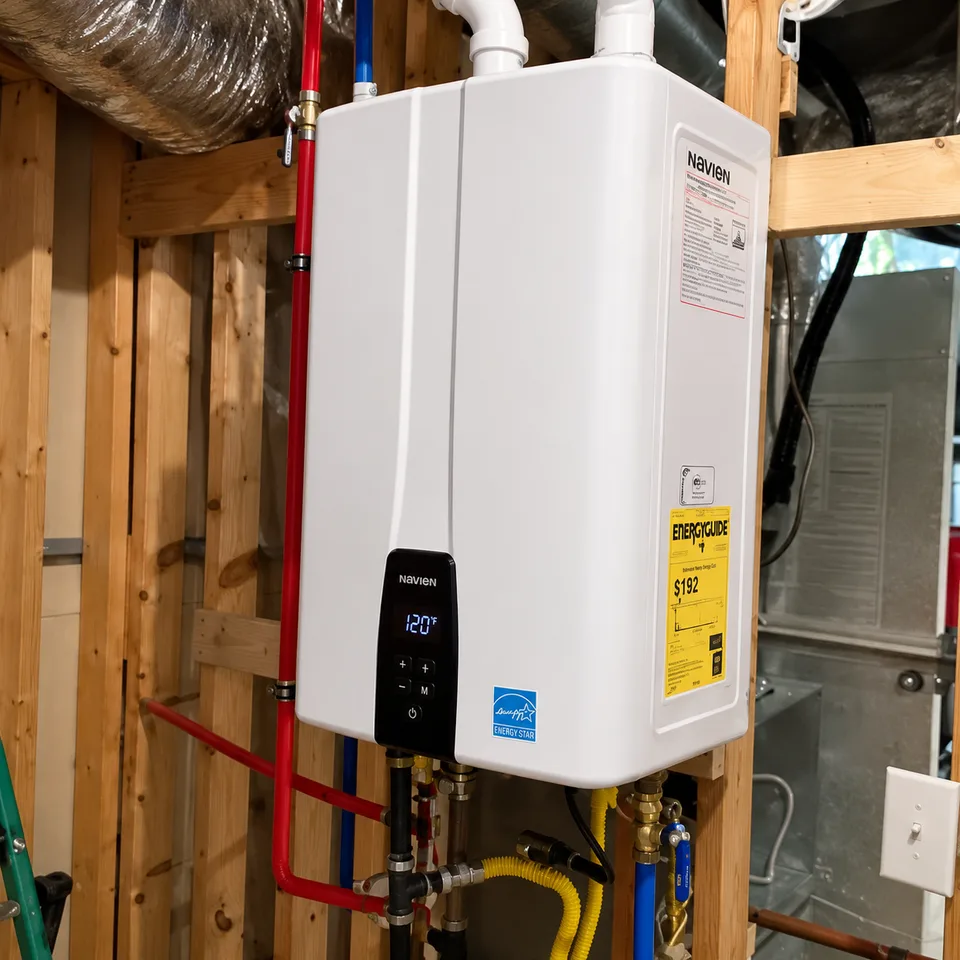
Tankless Water Heaters: Maintenance Differences
Tankless units don't have a tank to flush or an anode rod, but they do need attention:
- Descaling: Mineral scale can build up inside the heat exchanger. Descaling with a recommended solution at intervals suggested by the manufacturer helps maintain performance.
- Filters and screens: Ask a technician to check and clean these as specified in the manual.
- Venting and intake: Keep stored items away from the equipment and have a technician inspect these components.
Learn more about these systems on our tankless water heaters page.
Signs That Maintenance Isn't Enough
Even well-maintained heaters eventually wear out. If you notice rust-colored water, persistent leaks, frequent repairs, or an age well past the usual range, it may be time to plan a replacement. Our posts on warning signs of a failing water heater and how long water heaters last can help you decide.
Maintenance Summary
| Timing | Task | Who handles it |
|---|---|---|
| Monthly | Visual check for moisture, rust and new noises | Homeowner; report problems |
| As the manual recommends | Relief valve and discharge-pipe inspection | Qualified plumber |
| Based on model and water conditions | Sediment assessment and tank flushing | Qualified technician |
| As the manual recommends | Anode rod inspection and replacement | Qualified technician |
| During routine service | Temperature, gas venting and electrical checks | Qualified technician |
| As the manual recommends | Tankless descaling and filter service | Qualified technician |
When to Call a Professional
Visual checks can help you spot changes early. Arrange professional service for a full inspection or any work involving gas, electricity, draining, venting or pressurized hot water. Our water heater service page outlines what's available, and if something's already wrong, start with water heater repair.
Water Heater Service in Marietta
R.S. Andrews serves Marietta homeowners. Explore water heater service or replacement and installation, or call 770-816-8116 to discuss your home's needs and confirm service at your address.