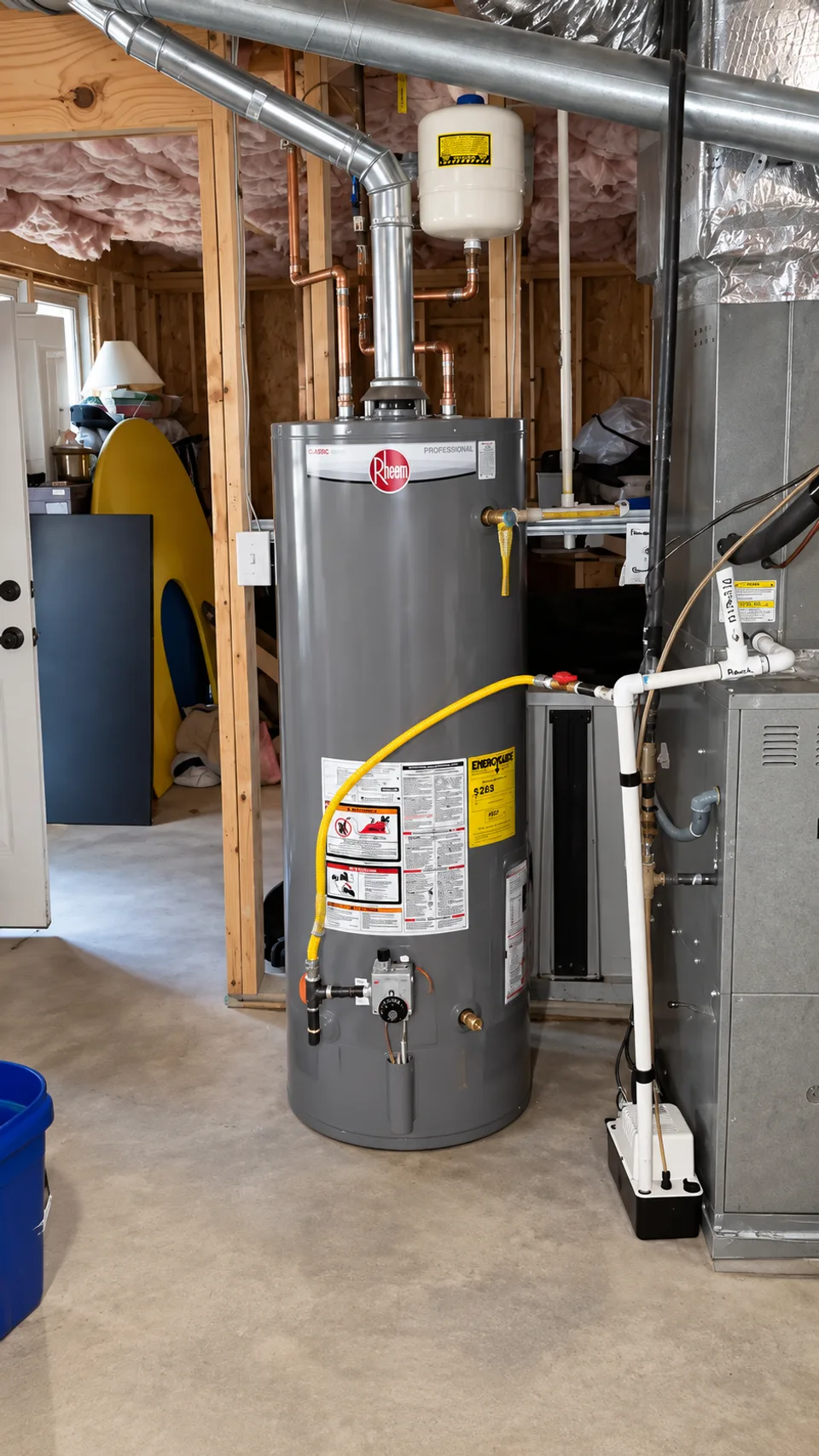
Cold Weather and Your Water Heater: Winter Prep Tips for Marietta Homeowners
Colder months put extra demand on your water heater. Use these winter prep tips to keep hot water flowing, protect pipes, and spot problems early. Serving Marietta, GA.
Published · R.S. Andrews
Marietta, GA winters are mild compared with up north, but cold snaps still stress water heaters, from homes near Scarlett on the Square to those out in East Cobb.
When temperatures drop, your water heater works harder. The water entering your home is colder, so the unit has to raise it by more degrees to reach your set temperature. Showers last longer, hot baths become more tempting, and guests start arriving for the holidays. If your heater is already aging or neglected, winter is when it tends to show.
A little preparation now can prevent a lot of cold-morning frustration.
Why Winter Is Hard on Water Heaters
- Colder incoming water. The heater must work harder to reach the target temperature, so recovery takes longer and energy use goes up.
- More hot water use. People tend to take hotter and longer showers in cold weather.
- Unheated installation spaces. Water heaters in garages, attics, crawl spaces, or utility closets can lose more heat to cold surroundings.
- Tankless units face a bigger temperature rise. Colder inlet water reduces the flow rate a tankless unit can deliver at a given temperature. See our sizing guide for the details.
Winter Prep Checklist
1. Do a Visual Inspection
Look at the tank, fittings, and floor for rust, moisture, or corrosion. Catching a small leak in November is better than finding a flood in January. If you find something, our guide on what to do if your water heater leaks explains the steps.
2. Schedule Sediment Service
Ask your technician whether sediment service is due under your model's maintenance schedule. Sediment reduces efficiency and recovery, which is more noticeable when demand rises. Review professional service guidance in our maintenance checklist, or schedule professional water heater maintenance.
3. Arrange a Relief-Valve Check
The temperature and pressure relief valve is a key safety device. Have a qualified plumber check it during service at the manufacturer's recommended interval. Do not operate it yourself.
4. Check Your Temperature Setting
Ask your technician to review the setting against your manual and household needs. Do not change internal controls to compensate for colder weather. Higher settings increase scald risk and energy use. If you have trouble keeping up, the issue is more likely sizing, sediment, or an aging unit than the thermostat.
5. Inspect Venting and Combustion Air (Gas Units)
With windows and doors closed for winter, proper venting and combustion air become even more important. Have a technician inspect vent connections and combustion air provisions; do not alter them yourself. Make sure your carbon monoxide detectors work. Read more on our gas water heaters page.
6. Insulate Exposed Pipes
Insulating hot water pipes near the heater, particularly in unheated spaces, reduces heat loss. Ask your technician about suitable insulation, safe clearances and exposed piping. Insulating cold water lines in unheated spaces also helps reduce the risk of freezing during cold snaps.
7. Consider an Insulation Blanket (Where Appropriate)
Some older tank heaters benefit from an insulating blanket, but many newer models are already well insulated, and improper installation can interfere with venting or controls on gas units. Check your manual or ask a professional before adding one.
8. Protect Against Freezing
Pipes and water heaters in unconditioned spaces can be vulnerable during hard freezes. Ask your installer to assess exposed piping and the model's cold-weather requirements before a freeze. Avoid blocking combustion-air openings while addressing drafts. Tankless units installed outdoors or in unheated areas may have freeze protection features, but their operating requirements vary by model. Built-in protection can require power and may not protect exposed pipes. Review the manual with your technician.
9. Keep the Area Clear
Don't store boxes, chemicals, paint, or flammable items around the heater. Allow clearance for service and airflow.
Signs Your Heater Is Struggling in Cold Weather
- Hot water runs out faster than it used to
- Recovery takes much longer
- Noises like popping or rumbling
- Lukewarm water despite a normal thermostat setting
- Water temperature fluctuating
These are common signs of aging, sediment, or component trouble. Review our post on the warning signs of a failing water heater and how to troubleshoot no hot water.
If Your Heater Is Already Old
If you've learned your unit is past its typical lifespan, winter is a sensible time to plan, not wait. Replacing on your schedule beats replacing after a failure on the coldest night of the year, when choices and availability can be limited. If you're not sure how old yours is, see how to find your water heater's age, and review the repair vs. replace guide.
Is Winter a Good Time for Tankless?
Some homeowners upgrade to tankless for continuous hot water and improved efficiency. Just remember that winter inlet temperatures affect output. Size the unit based on your coldest conditions, not your average. Our tankless water heaters page and the tankless brand comparison can help.
When Traveling for the Holidays
If you'll be away for several days:
- Ask your technician whether a vacation mode is appropriate and how freeze protection will be maintained while you are away.
- Ask someone to check on the house during cold snaps.
- Know where your water shutoff valve is in case of a problem.
Navien's manufacturer guidance on frozen tankless heaters explains why freeze protection and exposed-pipe protection need separate attention. Follow the instructions for your own model.
Get Ahead of the Cold
A short inspection and some basic maintenance now go a long way. If you'd like a professional to check your system, visit our water heater service page. If something's already wrong, our water heater repair page is a good first stop.
Frequently Asked Questions
Should I turn up the temperature in winter? Generally not. Raising it increases scald risk and energy use. If you're running out of hot water, the cause is more likely sizing, sediment, or an aging unit.
Can cold weather damage a water heater? Freezing can damage pipes and exposed components, especially in unheated spaces. Insulation, sealing drafts, and knowing your shutoff locations all help.
Do I need to winterize a water heater in the house? For heaters in heated spaces, usually not. For units in garages, crawl spaces, or outdoor locations, follow the manufacturer's cold-weather guidance.
When should I call a professional? If you notice leaks, repeated tripping, unusual odors, or poor performance, schedule service. See our water heater service page.
Water Heater Service in Marietta
R.S. Andrews serves Marietta homeowners. Explore water heater service or replacement and installation, or call 770-816-8116 to discuss your home's needs and confirm service at your address.